Innovation belongs to the Pilsen Region just as much as the 102.26-meter-high tower of St. Bartholomew’s Cathedral, the Šumava Mountains, Santini’s Baroque architecture, beer, and the Chodsko area folk costume. It is an integral part of the region, and not just in the 21st century!
More than 500 years ago, the Trojan Chronicle, one of the first books printed in the Czech language, emerged from a printing workshop in Pilsen. Another innovation was the Pilsner-type light beer, which was first drunk in 1842. Another world-famous brand with roots in western Bohemia is Škoda, founded here in 1866. Thanks to František Křižík, a native of Plánice in our region, the first electric tram was launched in Prague in 1891, but as early as 1881, his electric arc lamp was already competing with Edison’s light bulb. At a time when Křižík was waiting for his greatest successes, Ludvík Očenášek, later known as the “Czech rocket and aviation pioneer,” was born in the village of Kříše, according to the New Mexico Museum of Space History in the USA. He entered the hall of fame with his daring experiments in rocket construction, which he undertook between the world wars.
Today, the Pilsen Region is home to over one hundred scientific, research, and development teams working across a wide range of fields and topics. These teams operate within companies, research centers, and the facilities of the University of West Bohemia and the Faculty of Medicine of Charles University, both based in Pilsen. This unique innovative ecosystem – built by the previous generations – remains active and continues to grow, fueled by their ideas and collaboration. The inspiring personalities introduced to you through the exhibition of the Smart Accelerator of the Pilsen Region II project are living proof of this. Meet the respected experts and promising talents. Learn about their achievements and potential. See for yourself that the Pilsen Region truly is a region for the future.Today, the Pilsen Region is home to over one hundred scientific, research, and development teams working across a wide range of fields and topics. These teams operate within companies, research centers, and the facilities of the University of West Bohemia and the Faculty of Medicine of Charles University, both based in Pilsen. This unique innovative ecosystem – built by the previous generations – remains active and continues to grow, fueled by their ideas and collaboration. The inspiring personalities introduced to you through the exhibition of the Smart Accelerator of the Pilsen Region II project are living proof of this. Meet the respected experts and promising talents. Learn about their achievements and potential. See for yourself that the Pilsen Region truly is a region for the future.
Andrea Slívová: „Chemistry helps us navigate the world around us
Researcher, Institute of Organic Chemistry and Biochemistry of the Czech Academy of Sciences
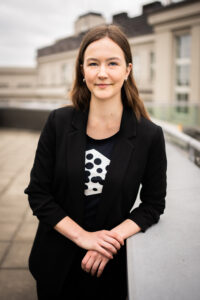 Nagelamide Q — what might seem to most people like a random cluster of letters — is a holy grail for Andrea Slívová from the Ullrich Jahn Research Group at the IOCB. To be more specific, it’s a natural compound belonging to a group of alkaloids isolated from marine sponges, with significant antibacterial and antifungal properties. Unlocking its full potential requires a functional approach for its total synthesis. Simply put, scientists need to figure out how to assemble it from simple, commercially available starting materials — much like building a LEGO kit.
“Ever since I was a little girl, I’ve been fascinated by the world around me. I tried to understand how and why it works, and chemistry became a powerful tool to h
elp me answer those questions,” the young researcher says, describing the beginnings of her fascination with flasks and pipettes. She began working on the project that deals with the synthesis of nagelamide Q while still in high school, and she continues to pursue it today as a student at the Un
iversity of Chemistry and Technology in Prague.
Andrea finds her major — organic chemistry — especially enchanting because of its practical nature. She’s always enjoyed manual t
asks in the lab. But, as she points out, experiments often — or rather usually — don’t go according to plan. In those moments, staying motivated and patient is essential. She describes the experience of finally holding a flask containing a product obtained through a long and trying process as an incredible feeling.
Jan Herzig: “I want to present science as one big show”
Main organizer of the Zvaž vědu! (Consider Science!) project, member of the GoHigher community, collaborator of the Astronomical Institute of the Czech Academy of Sciences
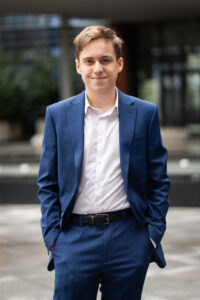 At just 16 years old, the student from J. Š. Baar High School in Domažlice has already won the International Olympiad on Astronomy and Astrophysics, traveled to California to witness a rocket launch, and developed a science popularization project called Consider Science!.
His fascination with astronomy began when he was 11 years old. Not long after that, he decided to share this passion for science with others. As the main organizer of the Consider Science! project — which focuses on the popularization of natural sciences and support of talented high school students — he’s now showing young people that science ≠ boring theory.
“I’m trying to show students that subjects like physics, math, chemistry, biology, and technology don’t deserve to be seen as a necessary evil. I want to present science as one big show and also show society that in the Czech Republic, there are really cool students who aren’t afraid to aim high, despite their young age,” he says enthusiastically.
According to Jan, social media plays a key role in attracting new science enthusiasts. It allows us to reach a wide audience with updates on scientific advances and upcoming events. In some situations, he also turns to artificial intelligence. AI helps scientists process massive amounts of astronomical data, allowing them to focus on more sophisticated tasks. He personally uses language models that help him write highly specific codes required for astronomy.
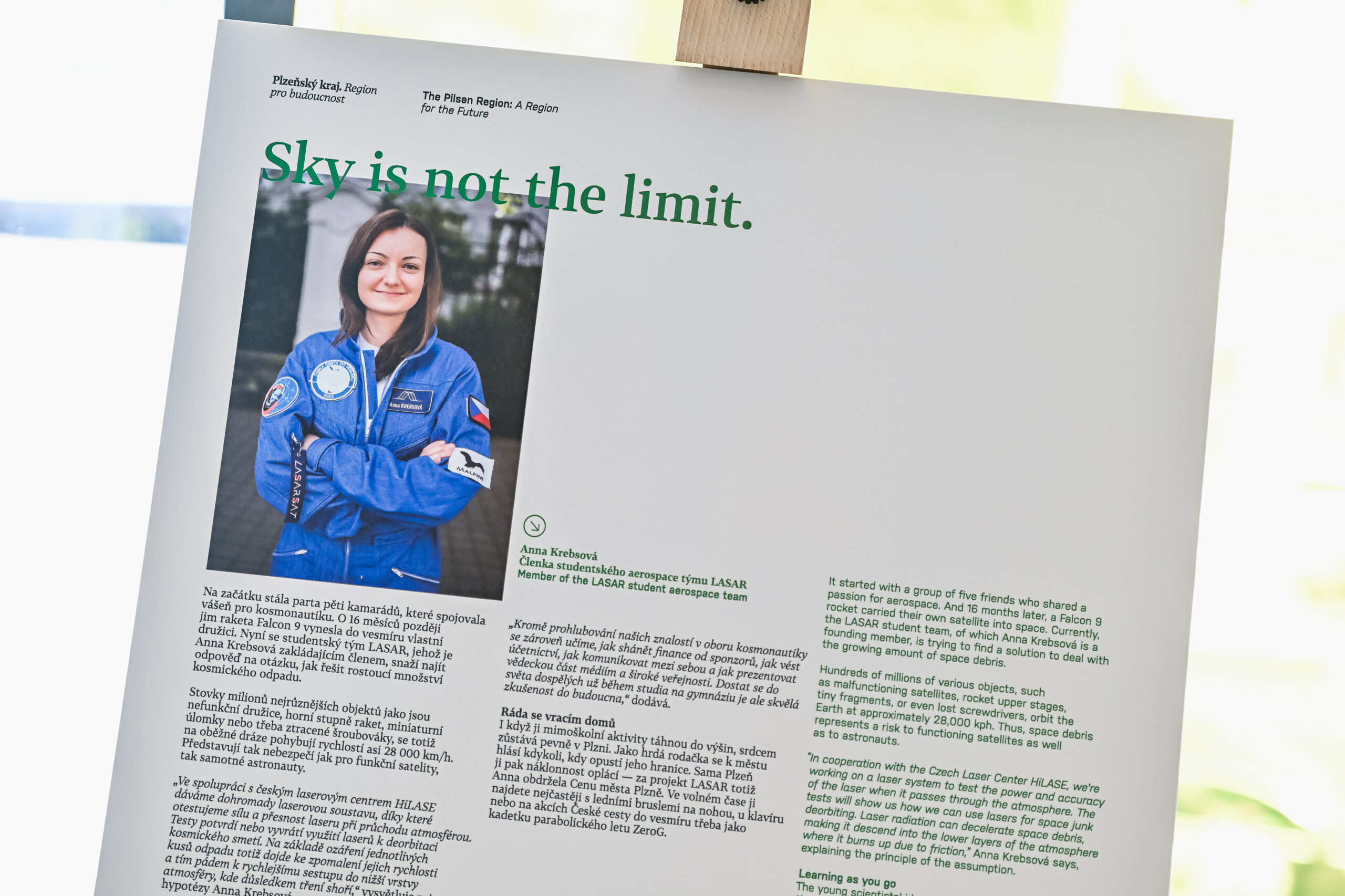
Anna Krebsová: „Sky is not the limit“
Member of the LASAR student aerospace team
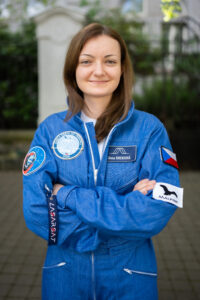 It started with a group of five friends who shared a passion for aerospace. And 16 months later, a Falcon 9 rocket carried their own satellite into space. Currently, the LASAR student team, of which Anna Krebsová is a founding member, is trying to find a solution to deal with the growing amount of space debris.
Hundreds of millions of various objects, such as malfunctioning satellites, rocket upper stages, tiny fragments, or even lost screwdrivers, orbit the Earth at approximately 28,000 kph. Thus, space debris represents a risk to functioning satellites as well as to astronauts.
“In cooperation with the Czech Laser Center HiLASE, we’re working on a laser system to test the power and accuracy of the laser when it passes through the atmosphere. The tests will show us how we can use lasers for space junk deorbiting. Laser radiation can decelerate space debris, making it descend into the lower layers of the atmosphere where it burns up due to friction,” Anna Krebsová says, explaining the principle of the assumption.
The young scientists’ idea which captivated the judges of the Conrad Challenge, a world-wide innovation competition, will be validated no earlier than within several years. The team originally planned to focus on using lasers to restart satellites that had stopped communicating. The first successes have already attracted many new enthusiasts to join the LASAR team. But being in charge of thirty people on a team, whose members could be counted on the fingers of one hand until recently, is not an easy task.
“Apart from acquiring further knowledge of cosmonautics, we’re also learning how to raise funds from sponsors, keep accounts, communicate with each other, and present our research to the media and the public. Entering the adult world while still studying high school gives us valuable experience that will be useful in the future,” she adds.
Even though her extracurricular activities take her to the sky, her heart stays in Pilsen. Pilsen itself repays her affection — for the LASAR project, Anna Krebsová received the Award of the City of Pilsen. In her free time, you can usually see her attending an event organized by the Czech Journey to Space project, where she popularizes the space industry as a cadet who has experienced ZeroG parabolic flight.
Matyáš Matta: “Science≠ boring theory.”
Founder and organiser of the Zvaž vědu! (Consider Science!) project, researcher of thin layers cooperating with the Faculty of Applied Sciences and the New Technologies — Research Centre of the University of West Bohemia in Pilsen.
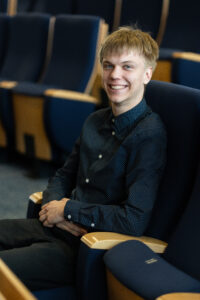 Matta began working in the field of science communication and outreach in 2022. Together with his classmates, he formed a partnership with the Faculty of Applied Sciences, which provided them with facilities they continue to use to this day — whether it’s for follow-up projects within the successful AstroPi Challenge or for organizing the aforementioned event.
“I believe that through the Consider Science! project, we’re showing students something engaging that might — at a time when they’re making big career decisions — encourage them to give science a chance. Even if they ultimately choose a different path, they’ll be better informed while making up their mind,” says Matyáš Matta, a student at the Masaryk Grammar School in Pilsen, explaining the purpose of the event.
The second edition of the Consider Science! event attracted over 300 students from 17 schools across the Pilsen Region. And what’s more, the idea inspired like- minded young people in Brno, where they organized their own showcase of science projects. But the reach of the event doesn’t stop there. After a meeting with the President of the Senate of the Czech Republic, a Prague edition of the event was formed as well. Matyáš, however, left that to others, saying: “My priority is to keep the quality high here in Pilsen — since I obviously have a strong bond with it.”
Michal Forgó: “I want to bridge the information gap between experts and laymen.”
Student at the Secondary School of Information Technology and Financial Services in Pilsen
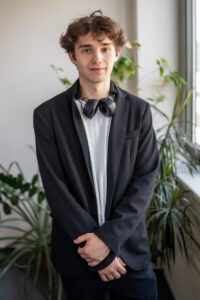 Michal Forgó is a student with an unusual hobby. His fascination with natural sciences brought him to one of the most dynamic fields we know today — quantum information science. Now he’s eager to share his passion with others. Quantum information science is a field at the intersection of several research domains. This cross-disciplinarity is what attracted Michal Forgó: “I like the combination of mathematics, information science, physics, and philosophy that coalesce into quantum information science. But I’m well aware that the field might be difficult to grasp. That’s why I’d like to reduce the information gap between experts and laymen.”
As part of a special project, he’s raising public awareness about this often misunderstood field of study. He believes that this can help accelerate innovations which can have a significant impact on science, industry, and everyday life. Michal hasn’t met many enthusiasts who would be on the same page with him, which makes the task of finding new colleagues willing to collaborate particularly difficult.
“I like doing difficult things. Quantum information science is one of them — and I don’t mean just doing the science itself. Even if you find someone who wants to cooperate, you might be confronted with obtaining high-quality and accessible information. What was true yesterday may not be true today,” he says, explaining the obstacles he must face.
He now wishes to take his project from school clubs and start collaborating with the Faculty of Applied Sciences, where he’d like to focus on quantum information science research and applications. He’s set himself a clear goal — to study at the Massachusetts Institute of Technology and become a world-renowned expert in quantum information science.
Eduard Plic: “Science is not only for the chosen ones.”
Student at the Masaryk Grammar School in Pilsen
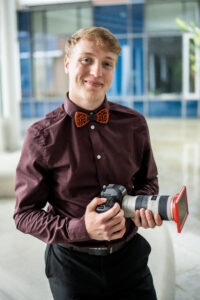 Stars, black holes, red giants, and sunspots. Eduard Plic has been delving into the realms of astronomy for more than 6 years. However, he’s not the only person who likes looking through a telescope. He spreads the passion for science among his peers with the Zvaž vědu! (Consider Science!) initiative which he co-founded in 2023.
“I was introduced to astronomy by our wonderful physics teacher. On his recommendation, I participated in the Astronomy Olympiad, and the rest is history,” Eduard says, describing his first encounter with astronomy, which fully developed during the COVID break.
Today, he exerts a similar formative influence on other young people himself. Several years ago, he and his like-minded enthusiastic friends founded the Consider Science! popularizing initiative that inspires high school students to consider research activities as their future career.
“The first event, held in December 2023 at the Faculty of Applied Sciences of the University of West Bohemia in Pilsen, was attended by nearly 300 high school students. Since then, we’ve expanded to Brno and Prague, which allows us to address students across the Czech Republic,” he says, listing the achievements so far.
In addition to student initiatives, he’s fully involved in the Students’ Professional Activities contest. He’s the author of a unique study in which he analyzed more than 7,000 hand-drawn pictures of the Sun from 1971 to 2023.
He developed and trained a convolutional neural network, capable of classifying active regions on the Sun, demonstrating the enormous potential of machine learning in solar physics.
Karolína Stinglová: “One day I want to help people.”
Student at the Secondary Medical School and the College of Higher Medical Education in Pilsen
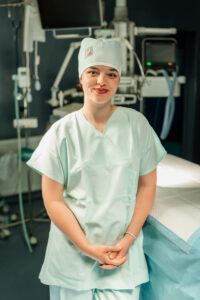 Karolína Stinglová has been involved in personalized medicine research projects at the Biomedical Center of the Faculty of Medicine in Pilsen, Charles University.
The most ambitious project she’s been involved in so far is titled “The Use of Decellularized Allogeneic Bile Duct Grafts for the Reconstruction of Extra-Hepatic Bile Duct Injuries.” In plain language, the team is investigating whether a decellularized graft of the biliary tree, harvested from a donor, can serve as a functional “duct replacement” for patients whose own extra-hepatic bile ducts have been damaged.
Karolína’s path to research was anything but straightforward. After an early setback failing to advance beyond the local round of the Students’ Professional Activities contest with her first project in a completely different field, she found herself with an unexpected amount of free time.
Where many would have stayed idle, Karolína seized the opportunity to develop a stronger proposal. This initiative led her to join a genuine research team, spend time in the operating room, and assist with experiments at the Biomedical Center of the Faculty of Medicine in Pilsen.
Although she’s still only a student, Karolína exhibits a focus and determination that many senior colleagues might envy. She envisions a future in medicine whether as a clinician or in a supporting role and she’s driven by a clear purpose: “I want to be a source of comfort for patients, offering them hope that everything will turn out all right. For those whose treatment is no longer possible, I wish to ensure they can pass away with dignity.”
Adéla Šefrhansová: “It’s amazing how life on our planet is both homogeneous and heterogeneous.”
Student at the Church Grammar School in Pilsen
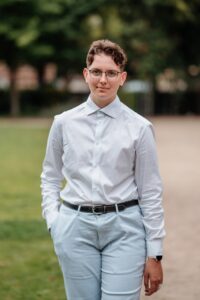 Adéla Šefrhansová’s story proves that sometimes even a tiny spark is enough to ignite a passion. During the first year of her studies at the Mikulášské Grammar School in Pilsen, she qualified for the Běstvinka expert training camp. Her later transition to the Church Grammar School and the support she received there only reinforced her passion for biology. Even though she’s still a high school student, she’s fully involved in the FishEvo project at the Faculty of Science, Charles University. Her task is to sequence samples of deep-sea fish that cannot be morphologically identified, which helps determine the genetic classification of the species.
“I got captivated by deep-sea fish because of how bizarre they are — their ability to adapt to various conditions and to live in an unfavorable environment with very little food and under enormous pressure. All those big teeth, expandable stomachs, luminescent organs, and large eyes are simply fascinating,” the young researcher says enthusiastically. She views her field as one microcosmos where everything is interconnected: “It’s amazing how life on our planet is both homogeneous and heterogeneous. While cellular life and viruses share an identical ‘programming language’, there are countless different organisms.”
Although Adéla is just entering the adult life, she’s already accomplished several tangible achievements. In addition to getting excellent results in biology olympiads, she was part of a nearly 3-week field expedition to the faraway Morocco.
Šimon Vlach: “Recellularization could be a game changer for transplantation as we know it.”
Biology student at the University College London
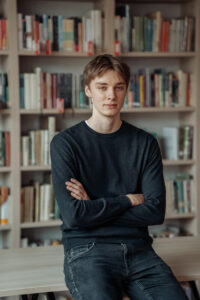 Recreating a new organ from one’s own cells to avoid waiting for a suitable donor? For some, this might seem like a sci-fi novel, for Šimon Vlach, student at the University College London, it’s his daily work routine. But the beginnings of his fascination with biology were much humbler.
“It was my father who drew my attention to biology. He helped me prepare for contests and brought me to field ecological surveys and wildlife monitoring trips. Thanks to biology olympiads and people I met there I eventually discovered what I liked the most,” the young researcher says, describing how he found his way to the field of study.
Later he replaced Wellington boots with a lab coat and fieldwork with molecular and cell biology, which he finds so captivating that he can’t stop working even during vacation. Being on summer break at the University College London, he’s currently working at the Biomedical Center in Pilsen on recellularization. During this process, specific cells are selected and removed from organs and replaced with healthy ones. The process can be facilitated by taking advantage of the similarities between humans and animals.
“If it was possible to repopulate a decellularized pig organ with human cells from the recipient to facilitate transplantation, a functional transplant provoking minimum immune response could be created. Human cells would subsequently restructure the transplant to make it as similar to natural human tissue as possible,” Šimon says, describing the possible advantages of recellularization.
While the experiments themselves bring suspenseful moments, what Šimon likes the most about his job is the preliminary brainstorming sessions during which he designs the experiments. On the contrary, cleaning laboratory equipment is something he would leave to others if he could. But as he quickly adds, a tidy laboratory helps the work go smoothly.