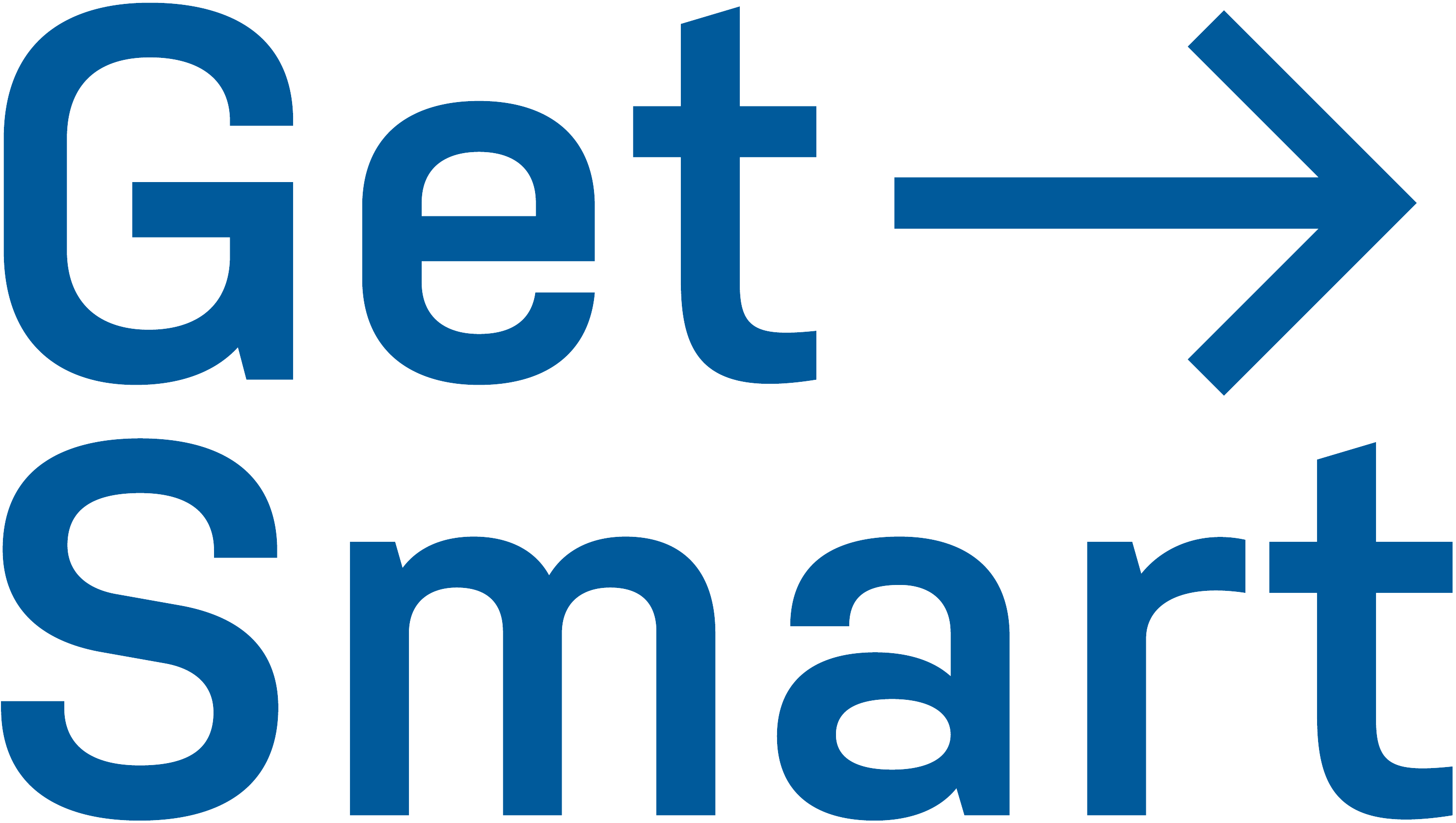

For an interview with the creative director, idea maker, filmmaker, and writer, Jakub Hussar, one had better have a dictionary. You might learn a lot of unpleasant truths about us Czechs after reading it, but don’t burn it. Rather, light a small flame of hope, which Jakub says we have. After all, we are a nanotechnology power, we produce the best lasers in the world and the best equipment for satellites, which, according to Jakub, would give us much more publicity than “chasing a piece of rubber around on frozen water”.
Jakub, the reason we invited you to our November meetup is not just because we know you as a great creative and a highly engaging speaker who has appeared on many podcasts. We were intrigued by your statement that “the Czech Republic can become an innovative superpower”. We really wanted to hear about that, plus it sounds promising and positive. You mentioned that the Czech Republic was one of the few countries that can manufacture an entire aircraft. I don’t want to ask specifically now whether we actually do produce these planes. In general, I’m wondering whether you think that we Czechs know what capabilities we actually have, and whether we are really putting them to use?
We have those abilities, no doubt, but they are often such isolated islands of positive deviance. There are a lot of smart people here, but it’s these isolated stories. If you look at Forbes 30 Under 30, you’ll see that we have here a hyper-talented Stanford student, a scientist who has discovered amazing things. A friend of ours has just won a grant from the Max Planck Institute. These are individual accomplishments, but what often happens is that they’re not aggregated or publicized enough. Those successes only get covered in the professional media, or the niche industries get to hear about them, but in the mainstream, we still tend to shine a spotlight on TV stars and ice hockey players, and we don’t really know what potential lies dormant in those people. The potential is really huge.
Would you say that this is more prominent in the Czech Republic than in other countries, that we don’t pay enough attention to these talented people?
I think that not only do we fail to acknowledge them, but we don’t even know how to work with them. These exceptionally talented children just flow through our education system spontaneously. They are not developed individually; they’re often ridiculed for being different. It’s very common for the really successful people to tell me about how they were bullied as children. I’m not saying I’m the successful and talented one, but I’ll give you an example. I have Asperger’s, and when I was in school, it wasn’t really recognized, it wasn’t tackled. People said I had St. Vitus’ dance (informal name for Sydenham’s syndrome, author’s note), or that I had ants in my pants. The teachers dealt with it by forbidding me to attend the after-school club, because I was disrupting the group. I was “disrupting” it in a way that I started a comic book manufacture there, we used our creativity to make things, which moved me and the other kids forward, but the system didn’t know how to work with that, so it persecuted, me rather than letting me teach the kids to draw. We don’t know how to capture those talents, and maybe we don’t know how to develop them either. We rely on them to develop on their own, and then we’ll reap the fruits. By taxing their billion-euro businesses, we make money as a society.
Let me go back to what you said about spotlighting the starlets. On the BBC and US TV stations, the hosts are older people who have worked their way up, so to speak. Here, the presenters are often models and Miss contestants. Is that related to who our role models are?
The UK has its tabloids too, they just don’t reach us here, while the BBC does. So, we don’t need to look at the Daily Sun and British models. But to some extent, there is a kind of tabloidization of culture. The high culture… and now again it’s terribly formulaic to divide culture into low and high, but it’s just that the mainstream is content with low culture. Popular films that break records at the cinema are unlikely to develop society, because they’re consumer-oriented. It’s fun, we laugh at it. Like going to the coliseum to watch gladiator fights, that didn’t lead to innovation in Roman engineering either. I’m worried that culture is being neglected a bit, because culture is the breeding ground for progress. In this country, education and science are underfunded, but culture is the Cinderella. There’s really not enough money for culture in our country, there’s no targeted system development of whole industries. An example is the gaming industry, which has long been subsidized in the world. Scandinavian game studios have huge subsidies, because the state knows that the money will come back to it, there is some prediction, whereas here these things are only just developing, they’re in their infancy. The local creative industries don’t have nearly as much support as in other countries, and they’re losing competitiveness.
Czech computer games in particular are communicated quite a lot by the Czech government even abroad, isn’t that so?
They are now, but a few years ago it wasn’t the case. It’s only now that the tide is turning again.
But the Czech games industry is quite well known in the world.
Definitely, but it’s still a relatively new thing. The Department of Game Design at the Film and TV School of Academy of Performing Arts in Prague is new, it should have been established 20 years ago. We’re simply behind the trends. What’s already standard in Europe, we adopt with a delay. We are so surrounded by mountains here that we are a bit isolated from both the West and the East in our basin. As we’re here in such a peculiar region, we tend to pick up the trends late, we’re resistant to trends.
So, you could say that we Czechs are “the latest adopters”?
Yes. The “early adopters” in our country are definitely just the top of the demographic curve, which means that our grandmothers are still learning to use mobile phones, but mobile phones have been here for a quarter of a century, so – and I don’t want to offend the elderly now, just giving an example – some things take us a very long time to adapt to, and we’re very resistant to them. On the other hand, we are loyal and very consistent. That’s why Nova TV is still so popular here today, because it simply shaped a whole generation of viewers. That’s why people use the Seznam search engine and shop on Alza, and not Amazon, they’re extremely loyal to their brands, and they have a problem adapting even to newer, more advanced things and media.
If we compare, for example, a Czech and an American or Japanese senior citizen, there is also a big difference, of course, due to the history and economy. There are certainly more reasons. Just like in the US you see far more people with disabilities on the streets, because the much younger buildings are logically better accommodating to that…
Just as it’s a problem to turn Prague into a cycling power, while Prague would really deserve bike lanes, but our streets are so narrow, they weren’t bombed out during WWII like German cities, they weren’t designed on greenfield sites, like the dynamically growing Copenhagen, where entire neighbourhoods are suddenly springing up. The initial conditions are not easy, we’re here in a kind of open-air museum that we actually want to adjust to the 21st century. We’re not completely successful, there are barriers, there are very strong, entrenched traditions and some customs and axioms that are not to be broken. And seniors are a great example. But there is a simple answer with them: communism. These people were kept behind the borders, they were held back, their wings were clipped. Our grandparents were people who lived their productive years under Nazism and Communism. And we still carry this relic, this burden, along with us. My grandmother, who is now a grandmother in New York City, danced in clubs and went on holidays to Mexico and San Francisco, and lived a very different life. That’s still a relic of totalitarianism.
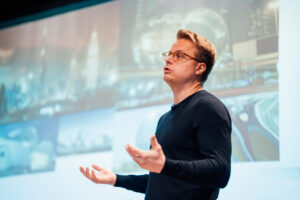
You said that your children, the Alpha Generation, would no longer be burdened by this. I agree, but at the same time, I think they’re still going to be influenced a little bit by parents who were raised by parents who lived through that time.
It’s a stigma, even if we think it’s not, it’s in our genes. But at the same time, we can think of it in a positive way. We are authentically afraid of Communism, and my children, who have not come into contact with Communism, and it’s some obscure historical thing for them, are subconsciously afraid of it in the same way that our parents were afraid of Nazism. It’s some kind of leverage against these trends returning. Once we become guileless and trusting and maybe just see an old film, read a nostalgic book, and think that it was actually interesting, that it was sort of a bizarre but actually cool thing, then there’s a danger that these things will come back in cycles. Like fashion trends return, political trends do too. That’s what I’m concerned about.
Jakub, you have children, and you have an advertising agency, so you must be thinking about young consumers who operate differently than us older ones. How do you perceive them? Are you concerned when you see the kind of influencers they follow, for example?
I’m not worried about what’s going to happen to our kids and their kids in particular, because that’s an age-old archetype. If you asked a Late Gothic dad what his Renaissance son was wearing, what kind of trousers and shoes he was wearing, he’d grumble. We find it hilarious today, it means those kids will grow up too, those kids will have kids of their own. They’ll find and stabilize their own hierarchy of values. And to me, it’s absolutely legitimate that they relate to influencers, when we were a TV generation that related to MTV starlets. What’s the difference between my friends liking the Spice Girls and my daughter liking, like, Ment? (a Czech influencer) That, on the contrary, is fine, and it’s often the case that those influencers themselves grow up and follow different paths. Either they quit the trade, or they become educators and spread awareness, as has happened to Kovy (a Czech Youtuber and influencer), who is actually turning into an opinion leader in a positive direction, even though at the beginning it was just goofy videos. I think kids always need their idols, and I don’t see the difference between having their hands glued to the phone or me not letting go of the joystick or keyboard for the 1990s games. We spent years in front of computers, never left the room, and we survived. The only thing that might be alarming is that humans have evolved as an organism for millions of years, and suddenly we have mobile phones, we’re hunched over them. There’s a downside, kids today have a terrible problem with motor skills.
I think overall this is a threat, but they’ll come to grips with it. They’ll just cope, because man has always been adaptable as an organism, and they’ll find a way, they’ll raise their head. They’ll realise that they’re doing something like this, and they’ll start taking more care of themselves. There’s a huge trend now of wellbeing, healthy eating, healthy exercise. I wouldn’t be worried about a further existence. Besides, what other choice do we have, otherwise it’d drive us mad, and it’s just that we’ve got a different perspective. We grew up on something else. But it’s still the same. On the other hand, the only thing I’m sorry about is that they’re competing against the whole world. That’s their only disadvantage. I used to compete with the guys in our neighbourhood, you could still get a foothold there on some level, but now you’re competing with the global community, and you don’t stand a chance there. The vast majority of people don’t have a chance to be the best, and maybe don’t even have a chance to be in the middle, they’re somewhere at the bottom, and those are the reasons why children’s mental health is a huge issue, and we’re failing miserably in the Czech Republic in this area. We have an acute shortage of child psychologists and psychiatrists. We have an autistic child at home, so we know. Finding care for him was a process for years, but I think that society is not stupid, and that it will hear the demand and respond, and that things will improve in the coming years.
But working with autistic people has improved a lot nowadays, hasn’t it? They’re in demand in companies too, they’re very good at certain areas or activities.
Haha, I can confirm that. Autism is not a disability, it’s a superpower, a superpower that comes with some negatives though. For example, you’ll be a genius chess player, and you’ll wet the bed, or you won’t even be able to make tea, but you’ll just be in the top 10 experts in the world. There are always some counterbalances, I’m brilliant at something, I’m going to fall short at something. No one is perfect at everything. None of us.
Do you think that if we Czechs just had a higher self-esteem, that half of the problems – and we have already touched on some of them in the interview or in your lecture – would not exist?
Yeah, to get up, stop nagging, and start doing something. It’s the bane of the Czech nation that we sit around drinking beer and moan about how everything sucks. It’s not going to get us anywhere, it’s just a hindrance. Get up and start doing something. The hardest thing for a painter is the blank canvas, the hardest thing is to start, but once you do, it comes naturally. The worst thing is to take that first step, that’s for sure. When you’re skydiving, it’s also the hardest thing to jump out of the plane, but then as you’re falling and gaining speed, it’s fun… So, it’s about not being scared of that first step, and having a healthy self-confidence. You mustn’t overdo it with self-confidence, so it doesn’t turn out the way it does in politics, for example, where there is a lot of self-confidence for my taste, and it is not proportional to the value the politician brings to society.
During your lecture, you asked the audience what we Czechs are good at. I always found it interesting how Czechs are so proud to say ice hockey or beer. Of course, it’s great that we have such wealth or heritage, but don’t we have it in our minds that “this is who we are, the beer drinkers”, that that’s enough? Not for me.
We’re the best at ice hockey, we’re the best at drinking beer, and we’re the best at colon cancer. We have the most developed porn industry, and the most meth labs in the world. So yes, there may be a lot of superlatives, but for me, those are not satisfactory metrics. I may like beer, but I don’t think it’s the kind of thing we should be bragging to the world about, because it somehow frames our image, and we will forever remain that alcoholic eastern periphery at that point. And if we’re good at ice hockey, I’m not belittling the fact that everyone in, say, Canada will know us. In the ice hockey regions we will be recognized, and it is a good promotion of the Czech Republic, because the Czech Republic doesn’t know how to promote itself, we fail in this as a country, we really don’t know how to self-promote, so at least something, but I’d much prefer if we promoted ourselves by having leading scientists and leading experts in niche fields, that we are a nanotechnology superpower, that we have the best lasers in the world, that we make the best equipment for satellites, that we are trendsetters and innovators. That, I think, will ultimately do us a lot more good than chasing a piece of rubber over frozen water. But when we win the Ice Hockey World Championship, people are over the moon. The nation unites around the hockey puck, people get intoxicated by the unity and togetherness, all the cars honk, and everyone waves flags. The moment a Czech scientist wins an international award, or when Dana Drábová recently received a medal from the Japanese emperor… I learned this from her personal Facebook page. I wouldn’t have known if I didn’t have Dana Drábová in my friends list. And I think that’s more important than winning the ice hockey championship.
Do you think that if there were more women leaders of world powers that global events would be different? That there might not be so many wars? The masculine world is more aggressive.
It’s actually a distrust of female elites, at least among the chauvinistic world of high-ranking men. They feel threatened that they could suddenly be ruled by someone who might be the source of their inferiority complexes, because maybe they had a strict mother, or maybe their female classmates did better in exams than they did. And they take it hard. Men are driven by hormones, they’re hunters, and they feel like they’re conquering the outside world, while women are by the fire, taking care of the kids. I’m a huge advocate of women in politics and in business leadership positions, because women cultivate discussion. But women often have more complex, complicated relationships than men, which is sometimes a bit of a disadvantage. A man will use Occam’s razor, and slash the debate, it’s a more straightforward way, but hand on heart. How many women have started wars? How many women dictators have there been? It’s going to be in the single digits. Yeah, there may have been a Lady Mao behind Mao Zedong and the murdering of millions of Chinese, along with her husband, but those women are relatively few. All these conflicts, the testosterone muscle flexing, the architects of these events are men, so for me, definitely more women in politics, because politics is being cultivated by them, and it’s to our benefit.
Some people respond to criticism, others to praise. What do you think works for the Czechs? I think we’re a bit timid, without the necessary self-confidence. I’m going back to the unmown lawn example. If you say to your neighbour in the Czech Republic that you would like him to mow it, that you want the place to be nice, I think he’s more likely to dislike you than to get down to it. So, it’s more the praise, isn’t it?
Well, I guess praise works for everyone in the world, but I think it’s more like hope. If you tell a person the benefits, and give them an option that is advantageous to them – and we Czechs are pragmatists, opportunists to a certain extent – it will sink in for him, and he may rethink or change his behaviour. I tell people that we Czechs have hope that we can really be inspiring in many fields, that we’re not a small country, that we’re a medium-sized country, and that we are exceptional in many things. I think one can then shift the paradigm of how one perceives the world in a positive way, that it can’t affect them in a bad way. That means not scaring him, not telling him: if you don’t do this, we will be the worst ones. I don’t think that’s the right thing to do, but rather the opposite: If you do it, we’ll be good. Turn it into hope, people need hope. They’ve been hearing for a long time that everything’s messed up here, but scaring people is not the way to go. They’re going to get deeper into their social bubble, lock themselves in their homes, and run away to their weekend houses, like they did under Socialism. That’s not a solution. The solution is to say things can be really good. We have a huge potential. We just need to start doing something systematic. And a little bit is really enough. It’s not that we’re all going to run out and become Japanese salarymen, working from morning to morning.